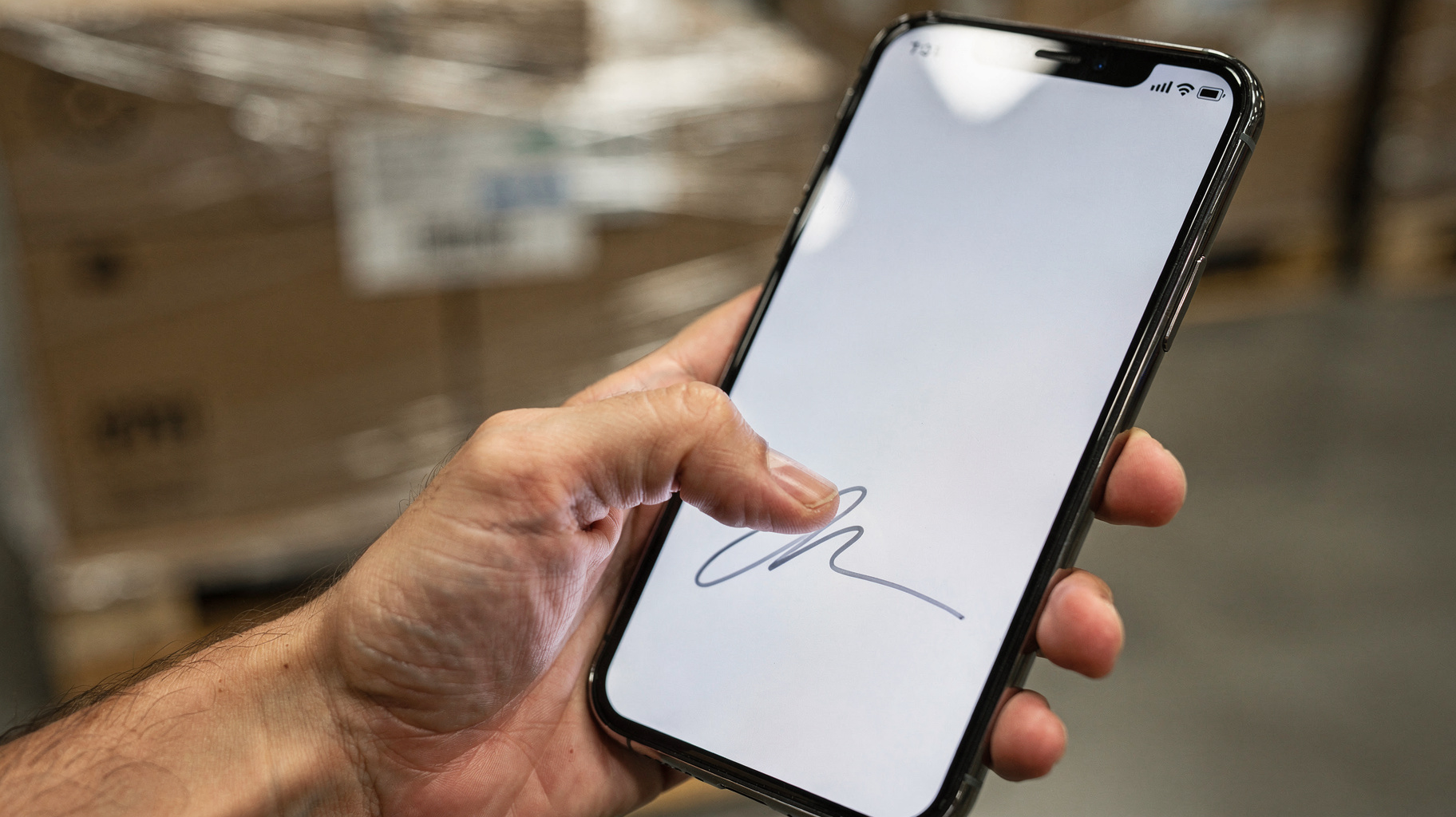
A proof of delivery looks like compliance paperwork, but for many freight forwarders, it is money paperwork. Customers often want the signed POD before they pay, so the invoice waits on a document that may still be in a driver's cab. This is the central problem that an electronic proof of delivery solves: it removes the journey of the paper. This article explains why the POD matters to your cash, where paper gets stuck, and how to build a routine that gets the document back the same day. For a complete overview of the final mile, see the complete guide to arrival and release.
The short answer
An electronic proof of delivery (ePOD) is a delivery confirmation captured digitally at the point of cargo handover. Instead of a signed paper sheet, the record typically includes the receiver’s name, an electronic signature, the time of delivery, and often a photograph of the shipment. For freight forwarders, this matters because many customers require the POD before they will approve an invoice for payment. A digital proof of delivery can reach the forwarder, the customer, and the finance team on the same day the delivery happens, shortening the time from job completion to invoicing.
Why the POD gates your invoice
For an operations or customer service team, a shipment is complete when the cargo is delivered. For a finance team, the job is not complete until the invoice is paid. The proof of delivery (POD) is often the bridge between those two events, acting as a gatekeeper for your cash.
The POD proves the service was completed
Many customers’ accounts payable teams will not pay for a delivery they cannot see proven. The POD is the evidence that connects your invoice to a specific, completed service.
Contractual terms can tie payment to the POD
Your customer’s payment clock may not start at the moment of delivery. It often starts upon receipt of a complete and correct invoice, and "complete" can be contractually defined to include the POD. If your terms are, for example, 30 days from the date of a valid invoice, any delay in securing and submitting the POD is a direct delay to your payment. It is essential to check your own customer agreements and standard trading conditions.
An invoice without a POD invites a simple dispute
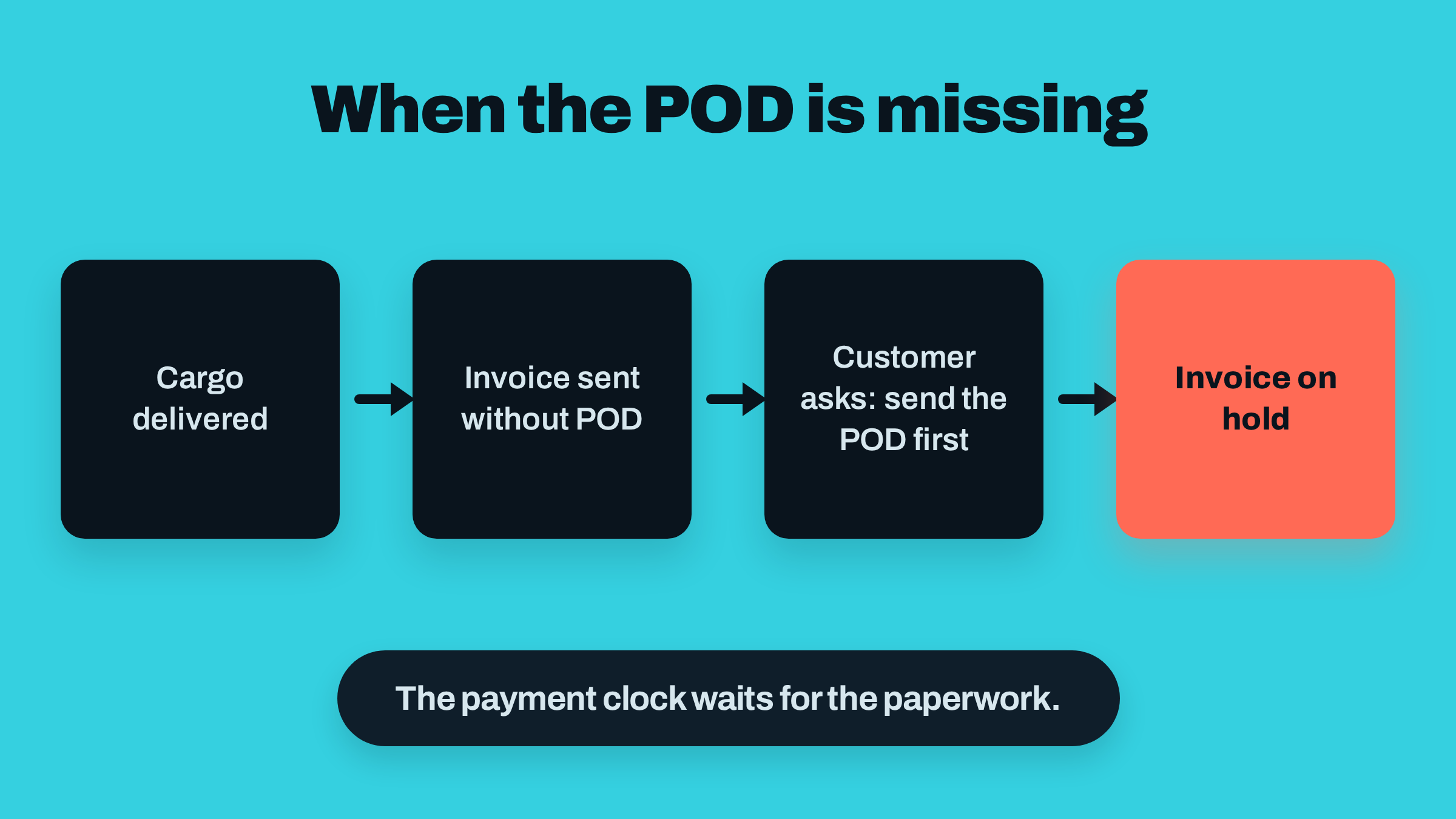
An invoice sent without a required POD is an easy target for rejection. The customer’s finance department does not need to question the rate, the accessorials, or the currency. They can simply put the invoice on hold with a note: ‘Send us the POD first.’ This pushes the invoice out of their payment workflow, where it waits for your team to chase down a document that might be days or weeks old.
Where paper PODs get stuck
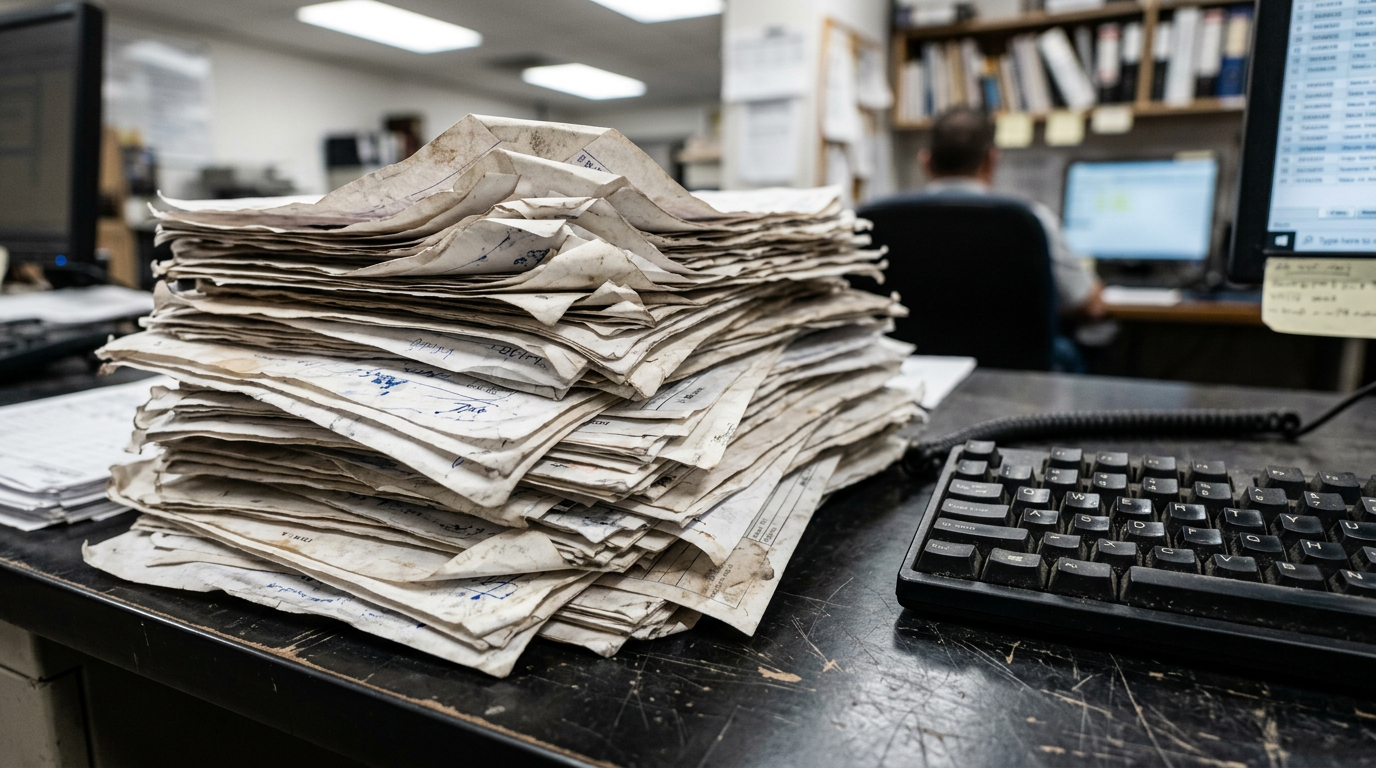
A paper POD creates a sequence of handoffs and administrative steps. Each step is a delay, and none of them adds value to the customer or the shipment. The journey of the paper from the consignee’s signature to your finance system is where time and money are lost.
The signed sheet stays with the driver
The first delay is the most obvious. After the consignee signs for the delivery, the paper document stays with the driver. It remains in the truck cab until the end of a shift or a multi-day trip. During this time, your operations team may know the delivery happened, but they lack the physical evidence needed to prove it to the customer and trigger invoicing.
It waits at the depot or with the subcontractor
Once the driver returns, the paperwork is dropped at a depot or the office of a trucking subcontractor. This is especially true for deliveries from major hubs like Jebel Ali, Felixstowe, or Los Angeles/Long Beach, where you rely on haulage partners. The POD now waits in a pile with other documents to be sorted, processed, and forwarded to you. You have no control over this part of the process.
It is scanned and matched later
Eventually, the paper POD is scanned. This creates a digital image, but it is a separate administrative task performed long after the delivery. The quality can be poor, and crucial information may be illegible. Then, someone has to manually match that scanned image to the correct job in your system, using a reference number that might be handwritten. This is another point of failure and delay, similar to the manual work involved in checking IGM status in India. An electronic proof of delivery workflow captures this link at the source.
What electronic proof of delivery changes
An electronic proof of delivery changes where and when the evidence is captured. Instead of a process built around moving paper, it is built around transmitting data. This fundamentally alters the timeline but does not remove the need for a solid process.
Confirmation is captured at the door
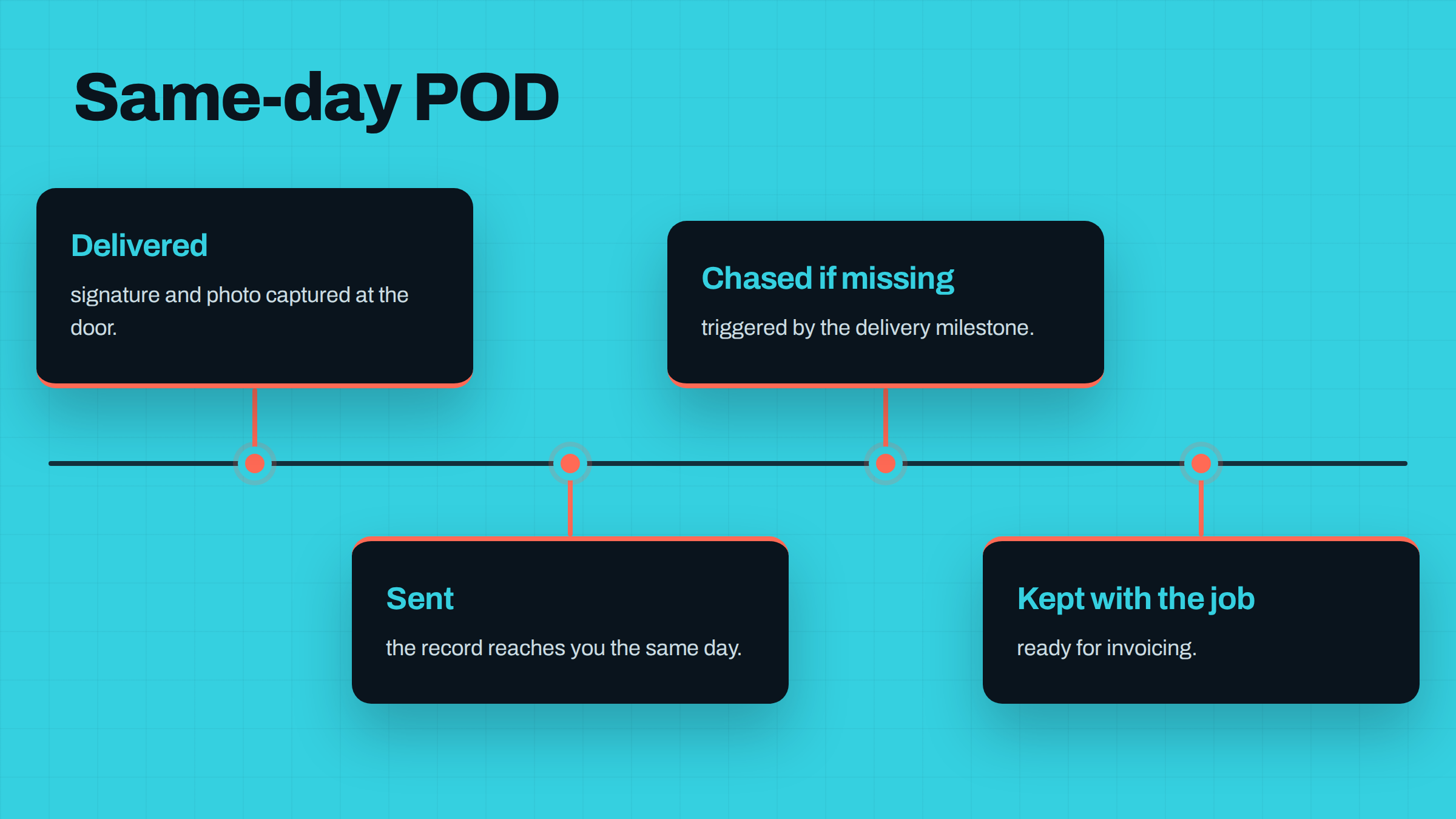
With a digital proof of delivery system, the driver uses a mobile app to capture the confirmation at the delivery location. This can include a signature on screen, the recipient's name, a timestamp, and often a photo of the goods and geo-stamped location data. This creates a richer, more detailed record at the moment of handover.
The record can reach you the same day
Because the record is digital from the start, it can be transmitted to your systems almost instantly. The driver’s app syncs with a central platform, making the POD available to your operations and finance teams the same day. This breaks the dependency on the driver’s return trip and the subcontractor’s administrative schedule. The wait shrinks from however long the paper takes to however long the upload takes.
It does not fix a missing process
However, technology alone is not a complete solution. An electronic proof of delivery does not repair a broken workflow. If a subcontracted trucker does not send the ePOD, someone on your team still has to notice it is missing and chase them for it. The core task of ensuring compliance remains; the ePOD simply makes the evidence easier and faster to obtain when the process works.
Forwarders still depend on their partners
As a forwarder, you often rely on trucking partners and destination agents to perform the final delivery. Your ability to get a same-day electronic proof of delivery depends on their capabilities and cooperation. If your partner in Nhava Sheva or Mundra still uses paper, your process is still a paper process. Make the POD, and how fast it comes back, part of what you agree with each transport partner.
A same-day POD routine
Getting the POD on the day of delivery requires a deliberate process. It cannot be an afterthought or part of a weekly administrative sweep. The goal is to make POD collection an automatic reflex triggered by the delivery event itself.
1. Chase on the delivery milestone, not a weekly sweep
The trigger for the POD chase should be the "delivery confirmed" milestone from your carrier or agent. As soon as that event is registered, the clock starts. This is a core principle in modern logistics communication and is one of the key ways how forwarders stop the WISMO calls.
2. Ask the trucker or agent for the POD immediately
As soon as delivery is confirmed, the request for the POD should go out to the partner who made the delivery. This might be your local trucker, a destination agent, or the airline’s ground handler. The request must be specific, with the job number, house bill, and consignee details, to avoid any confusion.
3. Keep the POD with the job
The received POD must be attached directly to the shipment file in your TMS or primary operating system. It cannot live in someone’s email inbox or a shared folder. Storing it with the job ensures that anyone in operations, finance, or customer service can find it instantly without having to ask. This creates a single source of truth for the shipment's final status.
4. Treat a missing POD as an exception with an owner
If the POD has not arrived within your agreed window (e.g., by the end of the business day), it should automatically become a formal exception. This exception needs a clear owner—a named person on your team responsible for resolving it. The process should define escalation steps: first to the driver or dispatcher, then to the partner’s management, until the document is secured. This ensures missing PODs are actively managed, not just forgotten.
What the POD means for cash
A faster POD means a faster invoice, which directly impacts your cash flow and Days Sales Outstanding (DSO). Every day you cut from the POD collection cycle is a day you bring your payment forward. If your customer’s payment terms are 30 days from the invoice date, invoicing one week sooner means you get paid one week sooner.
This is why an electronic proof of delivery is fundamentally a financial tool, not just an operational one. It shortens the time between fulfilling your service and being able to bill for it. To understand how this fits into your company's financial health, you can learn more about what is a good DSO in logistics. The goal is to shrink the administrative gap between delivery and invoicing to zero.
Where LogiTrack AI fits
For many forwarders, the challenge is not knowing what to do, but having the time and tools to do it consistently for every shipment. This is where a controlled workflow layer helps. LogiTrack AI, built on the FreighAI platform, is designed to manage this process.
A workflow triggered by the delivery milestone
The delivery milestone triggers the customer update, and the POD chase runs on its own. Instead of your team having to remember to follow up, the system maintains the workflow, chasing the missing document from your carrier or agent according to your defined schedule. This ensures no shipment is forgotten.
Human approval for every customer message
Crucially, automation does not mean a loss of control. Every message a customer sees waits for a person, who can edit, approve or reject it. An approved message goes out in their own name. This keeps your team in charge of all external communication, allowing them to handle exceptions with care while letting the system manage the routine follow-ups. The cheapest status call is the one nobody has to make. You can see how the desk works to understand this balance of automation and control.
This approach works alongside your existing TMS and your transport partners, adding a layer of process discipline so the POD chase happens and the customer is updated without adding to your team's manual workload.
To see this in action, watch an exception caught.
Frequently Asked Questions
What is electronic proof of delivery?
Electronic proof of delivery (ePOD) is a digital method for confirming that a shipment has been delivered to its recipient. Instead of a paper document signed by the receiver, an ePOD system captures the confirmation electronically, typically via a mobile device. The record usually includes the recipient's name, an electronic signature, a timestamp, and often GPS coordinates and photographs of the delivered goods.
Is an electronic POD legally valid?
The legal validity of an electronic POD depends on the specific contract between the parties and the laws of the country where the delivery occurs. In many jurisdictions, electronic signatures and records are legally recognized, provided they meet certain standards for authenticity and integrity. However, it is always best to check your customer contracts and local regulations, as some may still require a "wet signature" on paper for certain types of goods or transactions.
Who provides the POD in a forwarded shipment?
In a typical freight forwarding scenario, the proof of delivery is provided by the final-mile carrier—the party that physically hands the cargo over to the consignee. This could be a local trucking company, a drayage provider, a courier service, or the destination agent you partnered with. As the forwarder, your responsibility is to obtain the POD from that partner and make it available to your customer.
Why do customers ask for the POD before paying?
Customers ask for the proof of delivery before paying an invoice to verify that the service they are being charged for was actually completed. The POD serves as tangible evidence that the goods arrived at the correct destination. For their accounts payable department, it is a critical control document that matches an invoice to a fulfilled service, preventing payments for shipments that were lost, damaged, or never delivered.
How does a same-day POD improve cash flow?
A same-day POD improves cash flow by shortening your Days Sales Outstanding (DSO). Many customer payment terms begin on the date a complete invoice is received, and "complete" often includes the POD. By using an electronic system to get the POD on the same day as delivery, you can issue your invoice immediately. This starts the payment clock sooner, reducing the time your money is tied up in unpaid receivables.
Put the watch on your boxes.
Everything on this page runs live in a working tracking desk. Bring ten shipments on the water and watch the updates land before the questions do.
Book the working sessionKEEP READING