A rolled container is a shipping exception that is usually discovered, not announced. The box is discharged at the hub, the booked onward vessel sails, and no load event appears in the tracking trail. The forwarder who spots that gap first, re-baselines the ETA, and tells the customer with a new plan keeps the relationship. The one who hears about it from their customer loses the next shipment. This is a focused piece from our the complete guide to exception management.
The short answer
A rolled container is a container that did not sail on the vessel it was booked on. The carrier left it at the origin port—such as Nhava Sheva, Jebel Ali, or Felixstowe—or at a transshipment hub, and moved it to a later sailing. This vessel rollover often happens without advance notice from the carrier.
The key is to spot the event early in the tracking data, before the old ETA becomes an action item for your customer. Confirm the cargo rollover, calculate a new ETA based on the replacement vessel, and communicate the revised plan proactively. The forwarder who controls the narrative controls the relationship.
Why cargo gets rolled
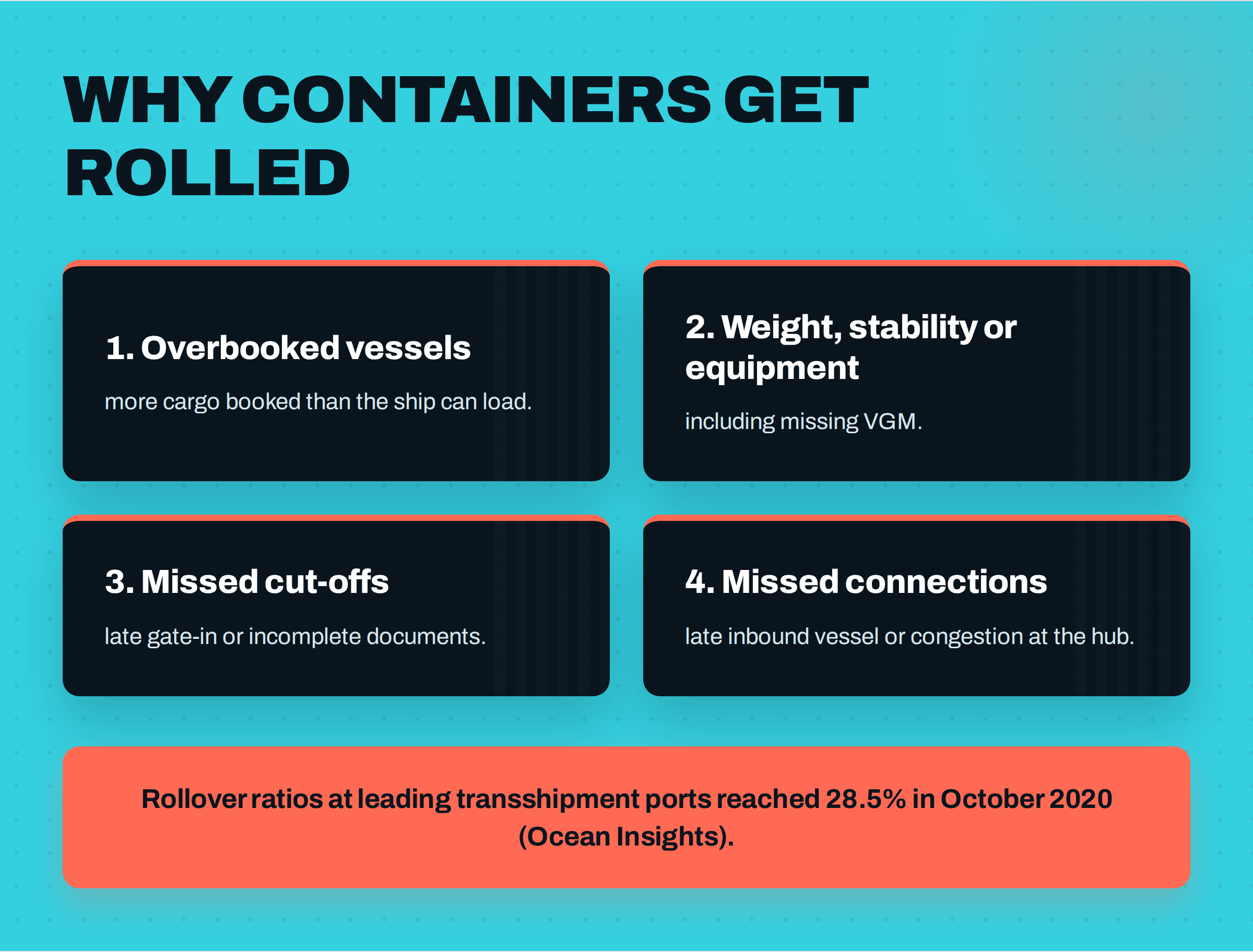
Carriers roll cargo for a mix of commercial, operational, and compliance reasons. While it became a frequent headline during the capacity crunch of the early 2020s, it remains a standard operational possibility in ocean freight. Understanding the common causes helps you explain the situation to your customer and manage expectations.
Overbooked vessels and allocations
Like airlines, ocean carriers sometimes accept more bookings than a vessel can carry. When this happens, they must decide which containers to load and which to defer. Cargo may be prioritised based on freight rate, contract terms, equipment type, or the carrier's relationship with the shipper. A standard booking confirmation is not always a guarantee of loading.
Weight, stability, or equipment constraints
A vessel must be loaded to maintain stability and stay within structural stress limits. A last-minute change in the cargo mix can force the stowage planner to leave a container behind. A container may also be rolled if its Verified Gross Mass (VGM) is missing or incorrect, or if the specific equipment type needed (e.g., a 40' high-cube or reefer) is unavailable at the port.
Missed cut-offs or documentation issues
Every sailing has strict deadlines for documentation submission, customs clearance, and physical gate-in at the terminal. If a container arrives late, or if shipping instructions are incomplete or incorrect, the carrier may have no choice but to roll the cargo to the next available sailing. This is a shipper-controlled or forwarder-controlled failure, and any resulting costs typically fall to them.
Missed connections at a transshipment hub
For shipments moving via a hub like Jebel Ali, Singapore, or Rotterdam, the risk of a rolled container exists at each connection. The inbound vessel may arrive late, port congestion can slow down discharge, or the connecting vessel may be full, causing the container to miss its onward sailing. This is a common form of vessel rollover that is often invisible until you check the event trail.
How common is a vessel rollover?
During the supply chain crisis of 2020, rollovers became extremely common. According to Ocean Insights data reported by Container News, overall rollover ratios at leading transshipment ports rose to 28.5% in October 2020. It is critical to note this is crisis-era data and does not reflect today's baseline, but it shows how quickly capacity constraints can impact service levels.
How to spot a rollover in the event trail
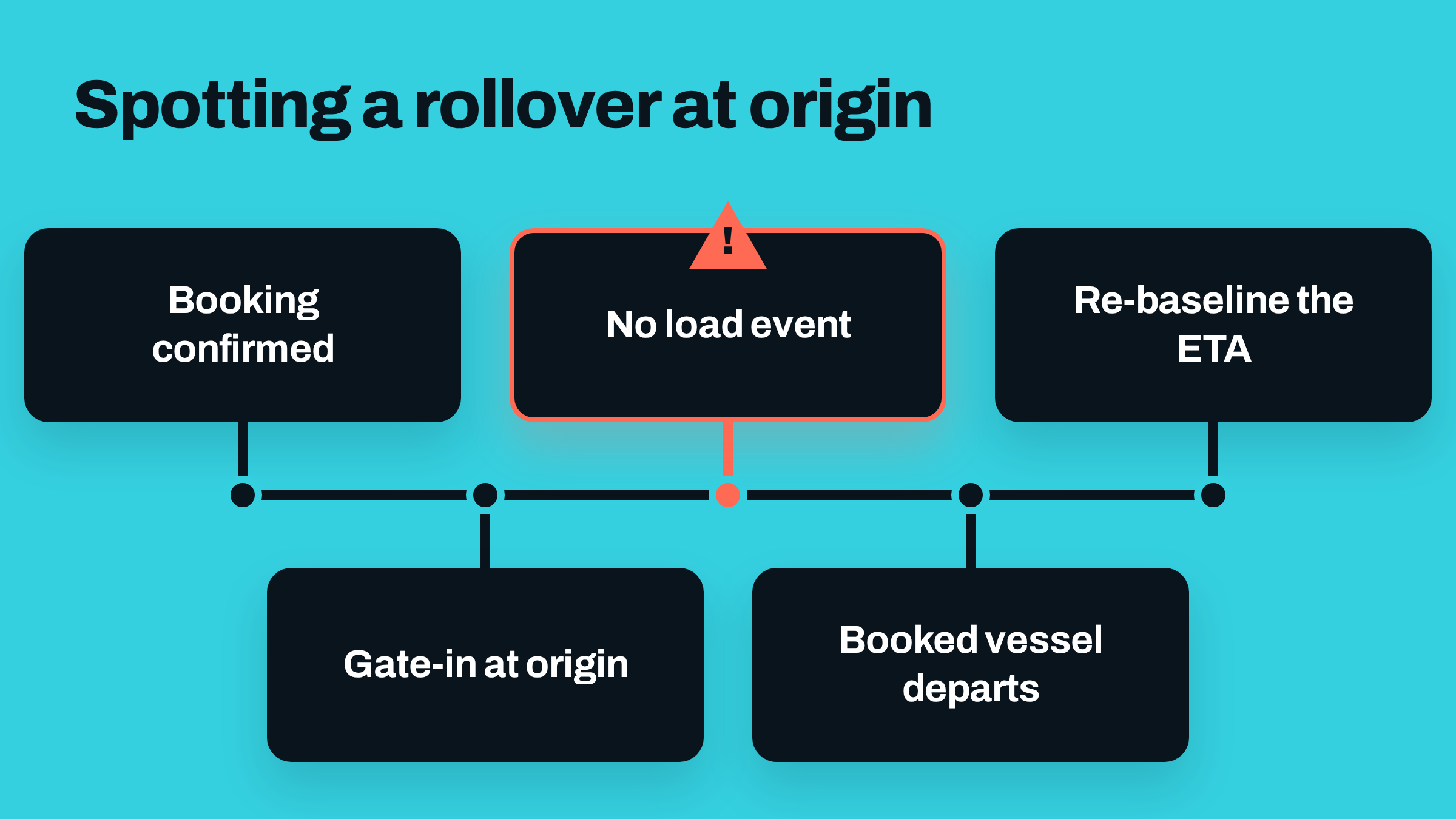
You can’t manage an exception you can’t see. A rolled container is a classic example of a shipping exception that carriers rarely announce in advance. The evidence appears in the gap between planned events and actual events. Your operations team can spot a likely cargo rollover by watching for these patterns in the carrier's tracking data.
| What you see in the events | What it usually means | What to do |
|---|---|---|
| Discharged at the hub, booked onward vessel departed, no load event on that vessel. | The container was likely rolled at the transshipment hub. It arrived but missed its connection. | Confirm the container's status with the carrier. Get the new vessel and voyage details, then re-baseline the ETA. |
| Gate-in at origin is recorded, but there is no load event before the booked vessel departs. | The container was likely rolled at origin. It was in the terminal but wasn't loaded. | Confirm the reason with the carrier (capacity, documentation, etc.). Secure a booking on the next sailing and update the plan. |
| A load event appears on a different vessel than the one on the booking confirmation. | The container was rolled to a later sailing, and the system has updated. This is the clearest evidence of a vessel rollover meaning a new plan is in effect. | Update your TMS and the customer-facing ETA immediately. Document the change for your records. |
Re-baselining the ETA
Once you suspect a rollover, the original ETA is no longer valid. To create a new, realistic ETA, you must identify the next sailing on the same service. On a weekly loop, the delay is often about seven days plus any additional terminal dwell time. However, you must confirm the new vessel and its specific schedule with the carrier. With schedule reliability still a concern—as a rule of thumb, one in three vessels arrives late—even the new ETA should be communicated as an estimate, subject to confirmation once the container is loaded.
What a rollover costs your customer
A rolled container creates a ripple effect that extends far beyond the port. The direct financial impact on your customer often comes from the disruption to their downstream supply chain plans, which were all based on the original ETA you provided.
Disrupted inland logistics
Your customer has likely already booked a trucker to pick up the container and a warehouse slot to receive it. When the ETA changes, these appointments must be cancelled and rebooked. Depending on the provider's terms, this can lead to cancellation fees, rebooking charges, or penalties for a "dry run" where the trucker arrives for a container that isn't there.
Broken promises to their own customers
The most significant cost can be reputational. Your customer has made commitments to their own clients—be it a retailer awaiting stock, a factory needing parts, or a project manager on a deadline. A delay can trigger penalties, lost sales, and damage to their business relationships. Your proactive communication is the only tool you have to mitigate this damage.
Potential for extra charges
If plans are not adjusted quickly, a rolled container can lead to extra charges like demurrage or storage at the destination port. While you may be able to dispute charges caused by a carrier-controlled rollover, the administrative effort is significant. The safer approach is to re-plan everything the moment the rollover is detected to avoid these costs altogether.
What to tell your customer: a note template
The forwarder who sends a clear, factual update before the customer asks where their cargo is wins their trust. Vague messages like "your shipment is delayed" are not helpful. Use a structured note that explains what happened, what the new plan is, and what it means for them. This is a core principle of how forwarders stop the WISMO calls.
Here is a copy-ready template your team can adapt. Send it as soon as you have confirmed the rollover and the new plan.
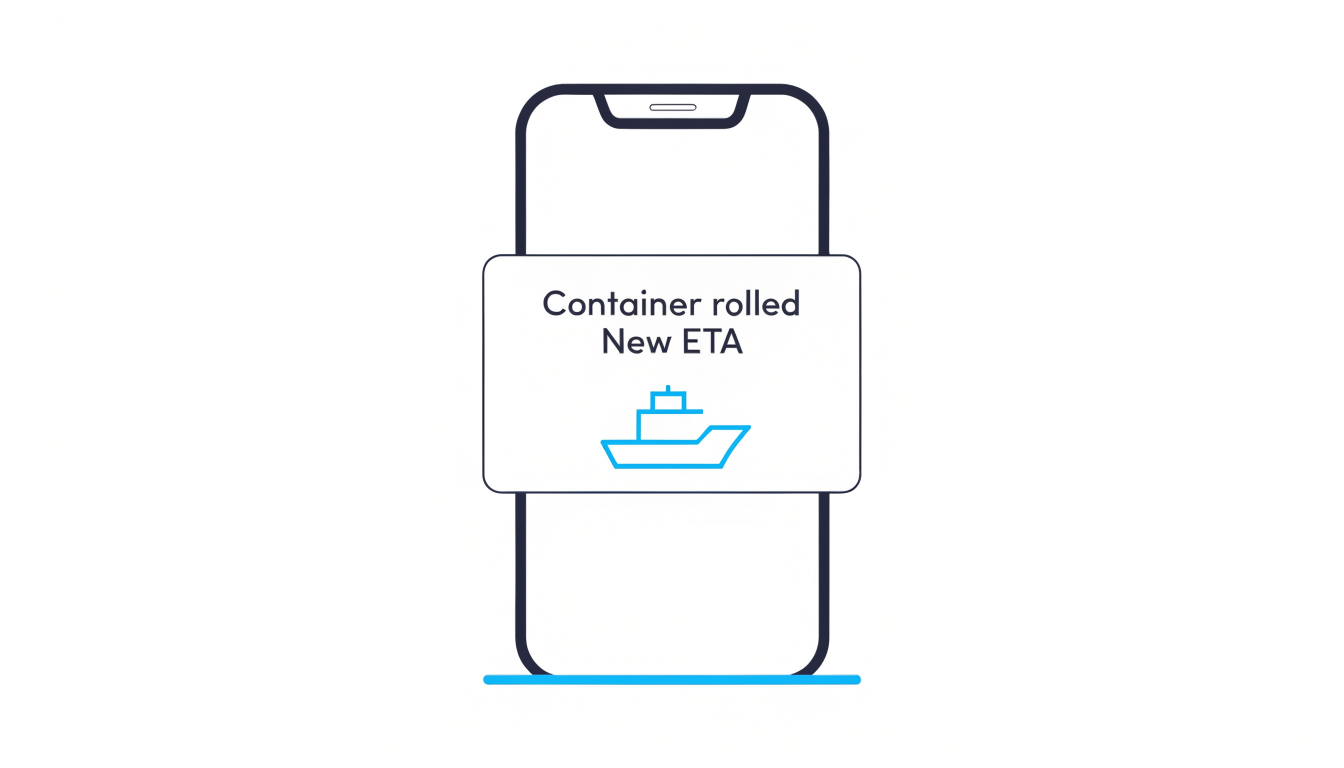
Subject: Update: Container [container number] rolled at [hub or origin port]
Hello [Customer Name],
This is an update on your shipment under B/L [Bill of Lading number].
Container [container number] was rolled at [hub or origin port]. This means it was not loaded onto the originally planned vessel, [original vessel name and voyage].
The carrier has re-booked the container on the next sailing:
New Vessel: [new vessel name and voyage]
New Estimated Arrival: [new ETA] at [destination port]This change means your original delivery appointment will need to be rescheduled. Please review your trucking and warehouse arrangements based on the new ETA. We recommend holding off on confirming a new delivery slot until the container has discharged at the destination.
We are now watching for the carrier to confirm the load event on the new vessel and will let you know as soon as it happens. Please let us know if you have any immediate questions.
Regards,
[Your Name/Team Name]
The four parts of a great update
- What happened, in plain words: Use the term "rolled" and name the port where it happened. This is clear and factual.
- The new plan and new ETA: Provide the new vessel name and the new estimated arrival date. This gives them a new baseline to plan against.
- What changes for them: Explicitly state the impact on their inland logistics (trucker, warehouse). Don't make them guess.
- What you are watching next: Tell them the next milestone you are monitoring, like the "load event on the new vessel." This shows you are in control and managing the situation.
How to reduce rollovers
While you can't eliminate every risk of a rolled container, disciplined operational practices can significantly reduce the chances of it happening due to shipper or forwarder-side issues.
Meet cut-offs with a margin
Treat all carrier deadlines as final. This includes cut-offs for documentation, VGM submission, and terminal gate-in. Plan to meet these deadlines with a buffer to account for traffic, system issues, or other unexpected delays. For a full breakdown of these terms, see our guide to shipping cut-off terms explained.
Confirm bookings close to the cut-off
A booking made weeks in advance can be subject to change. Reconfirm the vessel, voyage, and space with the carrier a few days before the cargo is due at the port. This helps catch any last-minute vessel schedule changes or allocation issues.
Use priority services for critical cargo
If a shipment is time-sensitive, ask the carrier about priority or guaranteed-loading products. These services often come at a premium but provide a higher assurance that your cargo will sail as booked. Be sure to understand the exact terms and any compensation offered if the guarantee is not met.
Watch events at the hub
For transshipment cargo, your job isn't done once the container leaves origin. A container roll is common at busy hubs. Monitor the discharge from the first vessel and the connection to the second. If you see a risk, you can act before the original ETA has passed.
Where LogiTrack AI fits
The cheapest status call is the one nobody has to make. But that requires your team to see an exception like a rolled container before your customer does. This is where LogiTrack AI works alongside your operations team.
LogiTrack AI watches every shipment. It is designed to classify the exceptions carriers don’t announce, including rollovers, blank sailings, and customs holds. Instead of just flagging a delay, it re-baselines the ETA based on the new reality and drafts the customer update for your team's approval.
It answers "where is my cargo?" on the customer's own thread, with an answer built from live carrier status. Crucially, every message a customer sees waits for a person on your team, who can edit, approve, or reject it. An approved message goes out in their own name. This is the key difference between a tracking desk compared with a visibility platform—it's not just data, it's a managed workflow. To see how the desk works, you can explore our process.
By catching the event and preparing the response, FreighAI's LogiTrack AI gives your team the time to be proactive, turning a potential service failure into an opportunity to demonstrate control and build trust.
The forwarder who spots the gap first, re-plans the shipment, and tells the customer with a new ETA keeps the business. To see this in action, watch an exception caught.
Frequently Asked Questions
What does rolled cargo mean?
Rolled cargo refers to a container that was accepted for a specific vessel sailing but was not loaded onto that ship. Instead, the carrier "rolls" it to a subsequent sailing. This can happen at the port of origin or at a transshipment port and results in a delay to the shipment's arrival.
Why do carriers roll containers?
Carriers roll containers for several reasons. The most common include overbooking (accepting more cargo than the vessel can hold), operational constraints like vessel weight and stability, equipment shortages, or the shipper failing to meet deadlines for documentation or cargo delivery. A container can also be rolled at a hub if it misses its connecting vessel due to delays.
Will the carrier tell me my container was rolled?
Not always, and rarely in advance. A vessel rollover is often a silent event that you discover by monitoring the shipment's tracking data. You might notice that the booked vessel has departed but your container has no "Loaded on Board" event. This is why proactive tracking is critical for freight forwarders.
Who pays when cargo is rolled?
Liability for costs associated with a rolled container depends on the cause and the carrier's terms of service. If the rollover was due to a shipper-controlled issue (e.g., late documents, incorrect VGM), the shipper is typically responsible for any extra charges. If it was a carrier-controlled decision (e.g., overbooking), you may be able to negotiate a waiver for direct costs like terminal storage, but downstream commercial costs are harder to recover. Always check the specific contract and bill of lading terms.
How can I avoid my cargo being rolled?
While you can't prevent all rollovers, you can reduce the risk. Ensure all documentation is accurate and submitted well before the cut-off. Provide the Verified Gross Mass (VGM) on time. Deliver the container to the terminal with a buffer before the gate closes. For time-sensitive cargo, consider using a carrier's premium or guaranteed-loading service.
Sources & References
This article draws on research and data from the following verified sources:
Put the watch on your boxes.
Everything on this page runs live in a working tracking desk. Bring ten shipments on the water and watch the updates land before the questions do.
Book the working sessionKEEP READING